

The Guide to Mirin
What it is, how it works, and why it's best made at home.

What is mirin?
Mirin (味醂) is a traditional fermented Japanese rice-based wine, originating as early as the mid 1400s.
Once used an elevated sipping beverage by the Japanese aristocracy, mirin is now best known for its role in iconic sauces like the beloved teriyaki and unagi, though these only scratch the surface of its modern usage and limitless culinary potential.
Lucky for you, making mirin at home is not only beginner friendly, but serves as a portal to a whole new universe of flavor and creativity. Let's make some.

Mirin: what you'll need to make it
Mirin is often characterized as a cooking "wine", but this is a bit of a misnomer, as mirin is the product of a slow, koji-powered fermentation combined with a high proof spirit and has little resemblance to wine making. Traditional mirin is:
- high proof alcohol (traditionally shochu)
- cooked rice (or another cooked starch)
- rice koji.
Rice koji is an essential element of mirin. Its powerful enzymes serve as the sparks of transformation, igniting fermentation that slowly infuses your distilled liquor with seductive sugars, amino acids, and aroma.

The 'How': Food Science Behind Mirin's Flavor
This process gives mirin it's silky texture, unmistakable sweetness and balanced umami.

-
Stage 1: Complex Carbs
The cooked rice, or any cooked starch for that matter, contains long strands of polysaccharides and trace amounts of proteins.
-
Stage 2: Enzyme Breakdown
Rice koji creates amylase, the key enzyme responsible for converting larger carbohydrates into smaller sugars by breaking down these long strands.
-
Stage 3: Tasty Sugars
After amylase has done its job, we're left with simple sugars and amino acids (from the trace proteins) that give mirin its iconic flavors and aromas.

APPLY YOUR KNOWLEDGE
How do I use mirin?
Mirin is as versatile as it is delicious. Whether you're a professional chef, curious home cook, or cutting-edge bartender, a homemade mirin has a place in any kitchen.
1. Building sauces - deglaze, enrich, emulsify.
2. Marinating/curing/pickling
3. Mixology - bring balance to a cocktail
4. Drink it straight! Like I mentioned earlier, this was the original purpose of mirin - and while I don't recommend drinking store-bought mirin, a well-aged homemade mirin is lovely when sipped chilled.
The Case for Homemade Mirin
Why You Should Make Your Own
Superior Flavor

90% of store bought mirin in the US is labelled as "aji-mirin", or literally "almost" mirin. Corn syrup and grain alcohol. It's a cheap, mass market, knock off for what is known as "hon" mirin, or "true" mirin. After making and tasting hon mirin, you'll know why this is a tragedy.
Infinite Possibilities

While tradition drives the processes behind the making of mirin, ingredients can be swapped to better match your regional offerings. Don't have shochu? Try gin or tequila! Don't have glutinous rice? Just use the leftover barley in the fridge. Go wild.
Simplicity + Shareability

It's super easy to make, and I love watching folks' reactions when I have them try some of my longer-aged mirins. Also, fill some cute glass bottles and your homemade mirin makes an extra special gift for any knowledgeable foodie.


How to Make Mirin: A Step by Step Guide
-
1. Gather Ingredients
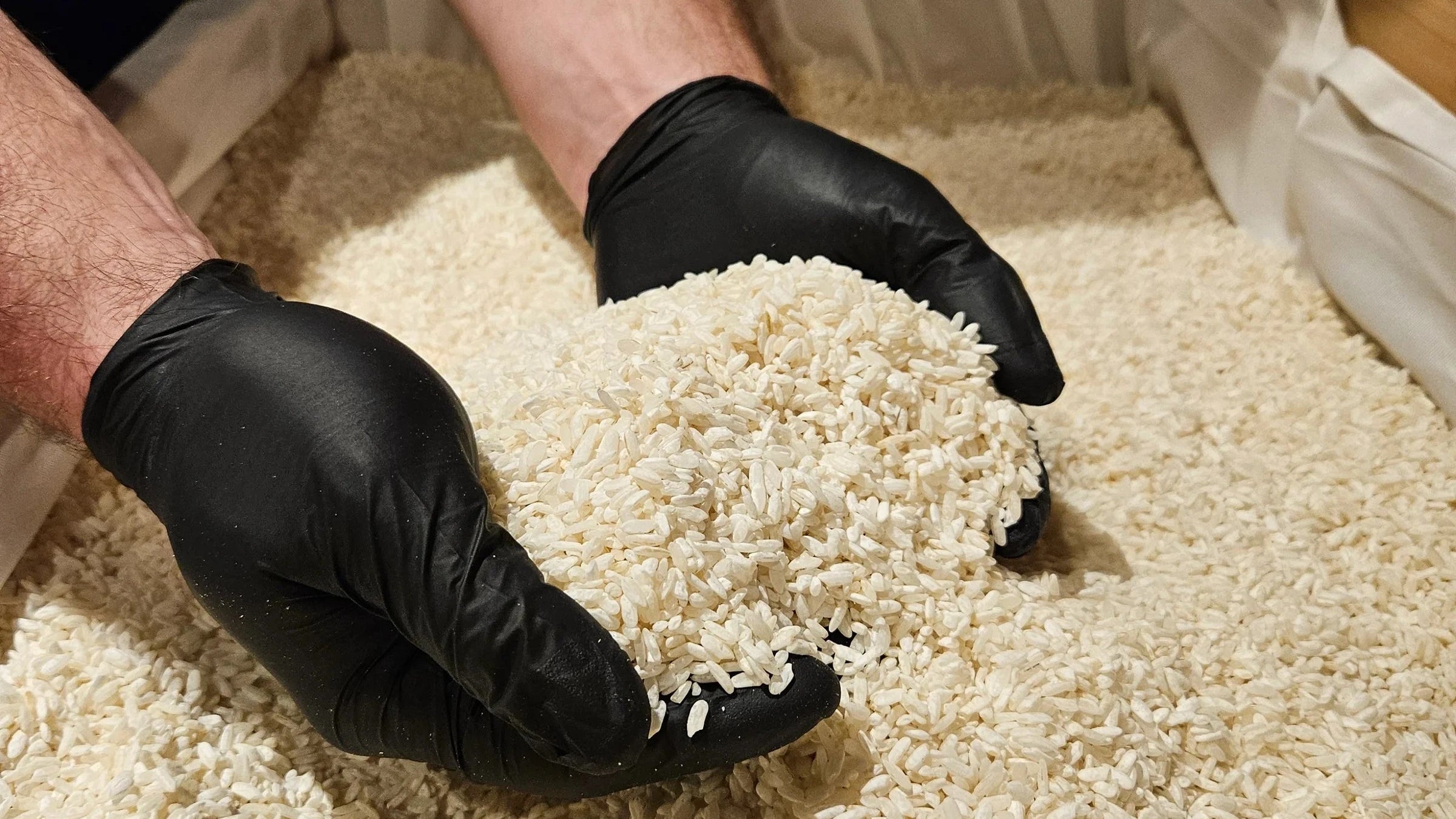
GET KOJI HERE- Sweet rice koji is best for mirin making.
- Shochu (or your preferred distilled spirit)
- Cooked glutinous rice
-
2. Gather Equipment
Super easy task on this one:
- Clean glass jar with tight fitting lid
-
3. Measure/Ratios
2 parts shochu or other distilled spirit : 1 part rice koji : 1 part cooked grain
Ex: 400g shochu : 200g rice koji : 200g cooked riceSee more notes below ↓
-

4. Combine
Everything. Into the jar. Stir to combine.
-
5. Ferment
Patience is key.
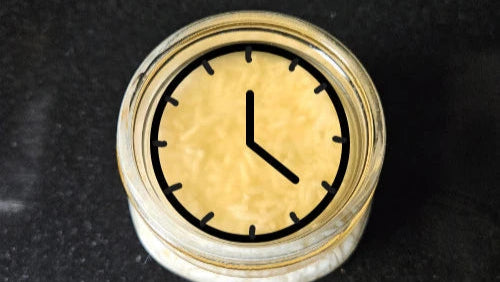
A well made mirin will typically start to develop flavor at room temperature around the 1.5 month mark, is ready after 6 months, and is best after 12 months. To appease your curiosity, I recommend tasting every few weeks just to see how flavors are developing.
And hey! If you like how it tastes after just 4 months, go right ahead and continue to the next step.
-

6. Clarify
Once you're happy with the flavor, its time to separate the solids from the liquids.
You can do this by simply straining through a cheese cloth, or for those with more patience, strain the mash bit by bit through coffee filters. This will yield a clearer final mirin.



WRITE THIS DOWN
Notes and Key Reminders
1. This may be one of the most forgiving ferments in the koji universe - almost zero risk, given the high concentration of sterilizing alcohol. Don't be scared, just go for it - and make sure everything solid (koji and rice) stay below the surface of the alcohol during its fermentation. You got this.
2. DON'T WASTE ANYTHING! You can use the strained mirin solids (or mirin kasu) as a marinade all on its own, or - if you have a dehydrator - dry the mirin kasu at 140F for 3 hours to remove most of the alcohol, then use it to "cap" the top of your miso to prevent spoilage and deepen flavor. Super neat trick.
3. If you're familiar with the freeze clarifying technique, don't use it for mirin. You want the sugars from the fermentation and the alcohol to stay combined.

JOIN US
Show off your work!
Did you try this recipe? We want to see it. Celebrate your achievement, ask for advice, and meet other fermenters by joining the Koji Connect Discord!